
Canada · Filter choice
Paper or metal for your filter coffee?
Choose a filter that fits your brewer, taste the difference in the last sip and keep a reusable mesh filter flowing freely.
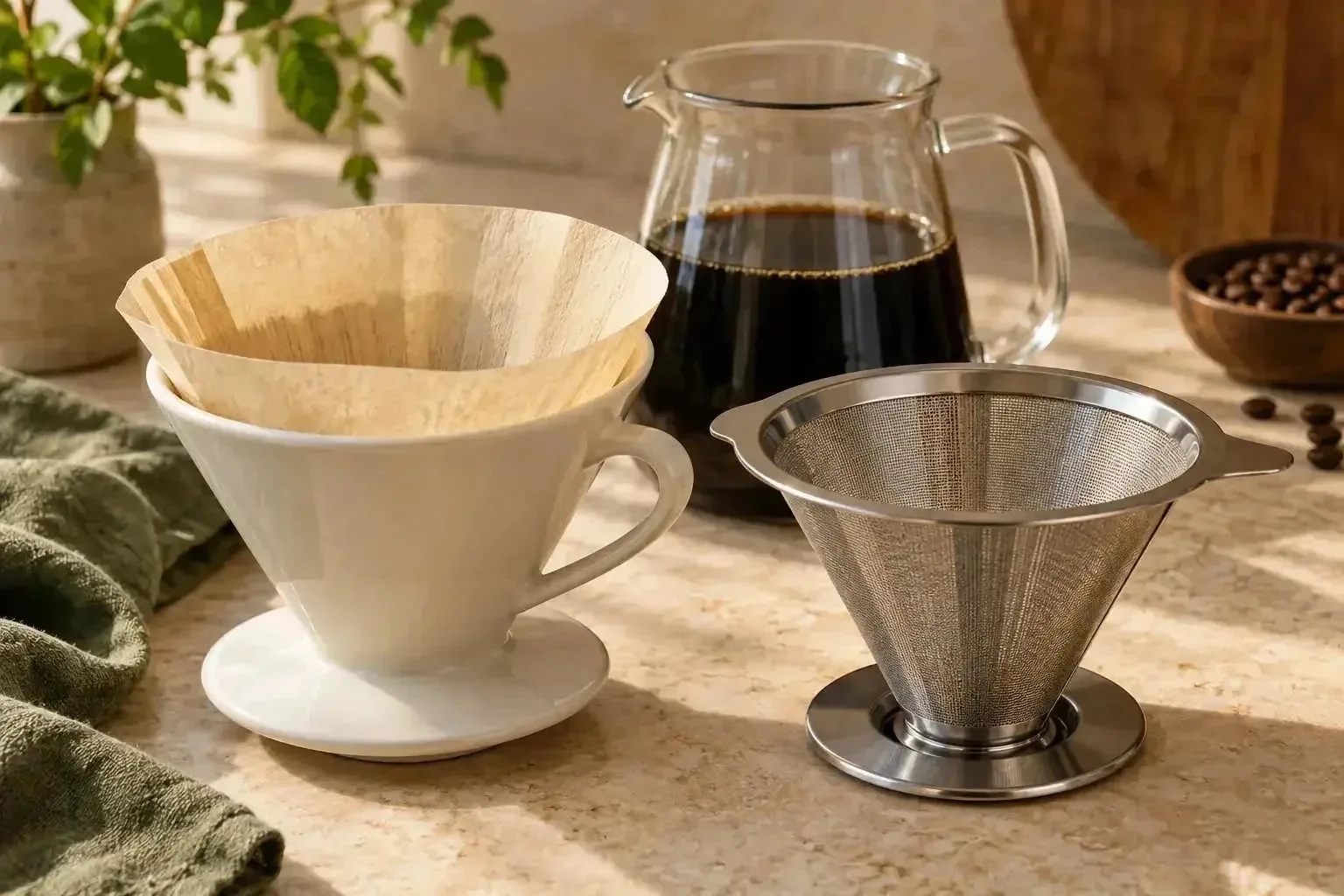
What changes when I switch from a paper coffee filter to metal?
Paper generally retains more fine particles and oils, which can leave a clearer cup. Metal lets more through and can give the coffee a fuller feel with some sediment. Filter shape, mesh, grind and the brewer also affect the result. Start by checking which filter the brewer is designed to hold.
Choose a filter for a cabin with limited washing water
Pack a paper cone and the reusable filter you already own. Brew the same dose with each before the trip. Drain the used paper and pack it out where required. With the metal filter, knock the grounds into a container before rinsing and note how much rinse water you actually use. Pack for that amount as well as the brew itself.
Check how the filter sits
Match a paper filter to the brewer’s basket shape and size. Check the base of the basket for a valve or support that the filter needs to clear. For a reusable cone, compare the rim, depth and support with your dripper or server. A cone designed to sit directly on a carafe may have a different base from a permanent basket for a drip machine.
AeroPress publishes a comparison of its own paper and stainless-steel filters. Its explanation of oils and mouthfeel is useful, but its flat discs fit its own brewers. Look up fit separately for any cone or basket you are considering.
Try a fair side-by-side cup
- Choose a brewer that supports both filter options, or use two brewers designed for their respective filters. If using two brewers, note that the shape and flow may contribute to the difference.
- Keep the beans, dose, water and grinder setting fixed for the first comparison. Two 15 g doses and 250 g of water per brew are an easy small trial if the brewers support that size. Prepare each filter as its maker directs.
- Use the same pouring routine, then note the drain time. Taste the cups at similar temperatures. Compare how the coffee feels on the tongue and whether fine particles gather in the bottom of the mug. Decide which you prefer before dialling in each filter separately.
Keep a metal filter ready for the next brew
Empty the used grounds, rinse the mesh promptly, and hold it towards the light to look for patches that remain blocked. A soft brush can reach the mesh where the manufacturer allows it. Follow the product’s cleaning instructions for detergents or dishwasher use.
If the last sip is grainier than you like, try a slightly coarser grind with the same mesh. If an established recipe suddenly drains much more slowly, check for trapped grounds before changing the recipe. A clean filter gives you a useful reference.
Common questions
Should I put a paper filter inside the metal one?
Use the combination only if the brewer’s maker supports it. An extra layer can change the flow and available room. For a paper-versus-metal taste comparison, test each supported filter on its own.
Which option is easier on a weekend away?
Paper is light and takes little clean-up if the right size is easy to pack. A reusable filter avoids carrying a stack of papers, but it needs a place to empty the grounds and rinse and dry the mesh.